Emirates SkyCargo has completed the transport of Altair-1, the UAE’s first commercial AI-enabled earth observation satellite. Part of Orbitworks’ Altair constellation, the movement of the satellite highilghts a landmark achievement in the UAE’s vision to become a global leader in space and advanced technologies. Altair-1 was flown on an Emirates SkyCargo Boeing 777 freighter aircraft from Dubai (DWC) airport to Los Angeles (LAX) ahead of its scheduled launch in October 2026.
70/ 100Meets threshold
Why this score
Matches an include keyword (+50)
Description is available (+5)
Custom rule: AI travel relevance (+15)
Topics you define
Each topic is a place to collect research from sources you choose. Sources and rules can be added when you are ready.
barq and Riyadh Air have signed a strategic agreement to develop a comprehensive payment technology solution for the airline. The long-term partnership will support Riyadh Air’s commercial operations through an integrated, secure, and scalable payments ecosystem.
Etihad Airways today announced a new seasonal service between Abu Dhabi and Gothenburg, starting 17 December 2026 and operating four times a week until 21 March 2027. The new service will create Gothenburg’s first direct air link to the Middle East and Asia, connecting Sweden’s west coast directly with Abu Dhabi and providing some of the fastest one-stop journeys to sought-after destinations across India and Asia through Etihad’s Abu Dhabi hub.
Etihad Guest, the award-winning loyalty programme of Etihad Airways, the national carrier of the UAE, announces a frequent flyer partnership with Taiwan-based STARLUX Airlines’ COSMILE loyalty programme. The partnership marks the next stage in the airlines’ strategic relationship, building on the codeshare agreement signed in June 2025 and the launch of Etihad’s direct services to Taipei in September last year. From 4 August, Etihad Guest members can redeem Etihad Guest Miles for flights in Business and Economy cabins across STARLUX’s network, giving them expanded access to destinations across Asia, North America, and Europe; including onward connections to popular destinations such as Los Angeles, Phoenix and Seattle in the US and Okinawa, Kobe and Nagoya in Japan.
Hotel groups and corporate clients burn months every year haggling over room rates that often fail to show up when employees actually book. Accor is leaning on automation to help fix this.
Convolutional Neural Networks (CNNs) capture local features efficiently but struggle with global context due to their limited receptive field. On the other hand, transformers effectively capture global dependencies through self-attention but suffer from high redundancy and computational costs. Thus, to leverage the advantages of both CNNs and transformers, we propose a unified model (UniCon-Former) that aims to provide robust and efficient performance on dynamic hand gesture recognition. The unified approach helps the model to learn both local and global features. At the beginning of each transformer stage, the convolution projections help in decreasing the dimension of the input vectors of the transformer block. This creates a pyramidal structure at each transformer stage. These features enable the UniCon-Former to reduce resource usage than vanilla transformers, making it flexible for learning multi-scale and high-resolution features, which is required in hand gesture recognition. We have performed experiments with NVGesture and Briareo datasets and achieved state-of-the-art results with fewer parameters and MACs.
LLM-based chat systems have become valuable tools for design practice, enabling rapid ideation and flexible task support. Yet these systems process designer utterances as generic sequences, maintaining context through recency rather than through any model of how the speaker organizes knowledge. In design conversation, this gap compounds as relational context decays between turns, identical words go unresolved across designers, and the conversation loops or restarts rather than deepens. We present CogChat, a real-time chat framework that grounds conversational AI in a personal heterogeneous knowledge graph constructed from each designer's input. The system extracts typed entities and relations into a heterogeneous graph, then applies a HGT (Heterogeneous Graph Transformer) to select structurally relevant nodes for response generation and to generate both intentional and exploratory probing questions. Technical evaluation shows that HGT-based entity selection outperforms both ungrounded LLM interaction and naive KG augmentation, which introduces noise that degrades response quality. A within-subjects study with nine professional designers indicates that grounding conversation in a relationally structured, designer-specific semantic context improves context retention, personalized intent interpretation, and conversational depth while reducing cognitive load. These findings suggest that structuring a designer's expressed concepts and relations as a dynamic knowledge graph can preserve relational context that fades across turns, pointing toward a graph-grounded approach to long-term context management in LLM-based interaction.
Contemporary online assessment systems rely primarily on browser lockdown, webcam monitoring, and behavioural analytics, yet remain vulnerable to attacks that extract the assessment content itself through screenshots, screen sharing, optical character recognition, and automated scraping. This paper extends the Multi-dimensional Spatio-Temporal Context Camouflaging Model (MSCCM) within the MARS (Multi-modal Assessment Resilience Suite) by introducing the Multi-Layer Context Camouflaging Theory (MCCT), a mathematical framework that protects rendered assessment content through semantic superposition. Authentic assessment content and synthetically generated camouflage are represented as a unified rendering while remaining recoverable only by legitimate candidates. The framework models the adversarial extraction process through an explicit extraction-channel operator and develops six coupled constructs: the Context Inversion Operator, Contextual Lamination Operator, Separation Channel, Human Readability Functional, Computational Ambiguity Functional, and Context Camouflage Tensor. Computational ambiguity is formulated using conditional entropy, yielding a closed-form expression that quantifies uncertainty during unauthorized extraction, while legitimate recovery is guaranteed through an exact filtering identity. We further establish theoretical properties governing ambiguity, camouflage density, semantic preservation, multi-observation leakage, and temporal multiplexing, and present a rendering algorithm with computational complexity and a pre-registered evaluation protocol. MCCT provides a mathematically rigorous foundation for behaviorally adaptive, accessibility-aware, and computationally resilient digital assessment by securing rendered assessment content while preserving readability for legitimate users.
While the detrimental impacts of driving under the influence of stimulants such as methamphetamine are well-documented, the driving performance of individuals currently under-treatment has received considerably less attention. This study compared the behavior of individuals with a history of stimulant abuse (across two distinct treatment phases) with a control group of healthy drivers using a driving simulator. Oculomotor and biomechanical data were continuously collected via an eye-tracker and a Kinect sensor, respectively. These parameters were utilized to train a K-Nearest Neighbors (KNN) classification model designed to detect high-risk behavioral patterns in drivers undergoing methamphetamine rehabilitation. Through the evaluation of various feature combinations and neighborhood configurations, the optimized model successfully discriminated between normal drivers and those with a history of abuse with an accuracy of 90%. Detecting at-risk drivers through technologies embedded in Advanced Driver Assistance Systems (ADAS) by continuously monitoring physiological and behavioral parameters, facilitates a proactive safety strategy. Issuing real-time alerts to the driver, passengers, and external monitoring networks can ultimately mitigate the risk of traffic collisions.
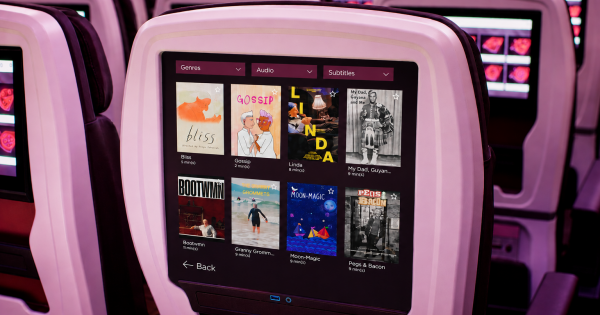
Virgin Atlantic customers can now watch a new collection of dementia-friendly short films curated by Women Over 50 Film Festival (WOFFF), as the airline continues its partnership with the festival for a third year. The new collection marks the third year of the partnership and will be available throughout the year on Virgin Atlantic’s in-flight entertainment platform, Vera. The films have been selected to offer a calm, engaging and accessible viewing experience for passenger’s people living with dementia, who may find full-length films, complex plots or fast-paced editing harder to follow during a flight. The collection can also support families, friends and carers travelling together by offering a shared viewing experience that feels gentle, manageable and inclusive.
Travel Trends has officially released the full agenda for Travel Trends Summit V3 sponsored by TourRadar, revealing an ambitious two-day program that brings together more than 40 of the travel industry’s leading founders, executives, investors, marketers, and innovators to explore one central question: What’s Beyond AI? Taking place October 28-29, 2026, the virtual event moves beyond the hype surrounding AI to examine the practical technologies, leadership strategies, and business models reshaping the global travel industry. Now in its third year, the Summit has doubled attendance year over year since launching in 2024, with previous editions attracting more than 2,000 participants from 50+ countries.
Nothing ruins a great night of sleep faster than getting too hot. We slept on a myriad of cooling mattresses to find which ones drew the heat away best.
Records obtained by WIRED detail hundreds of allegations of Customs and Border Protection workers misusing internal tools to look up romantic interests and track colleagues’ cell phones.
Over a billion people worldwide have livers with excess fat, which can lead to a host of medical problems. Researchers think AI tools can spot the condition—and help stop it—early enough to save lives.
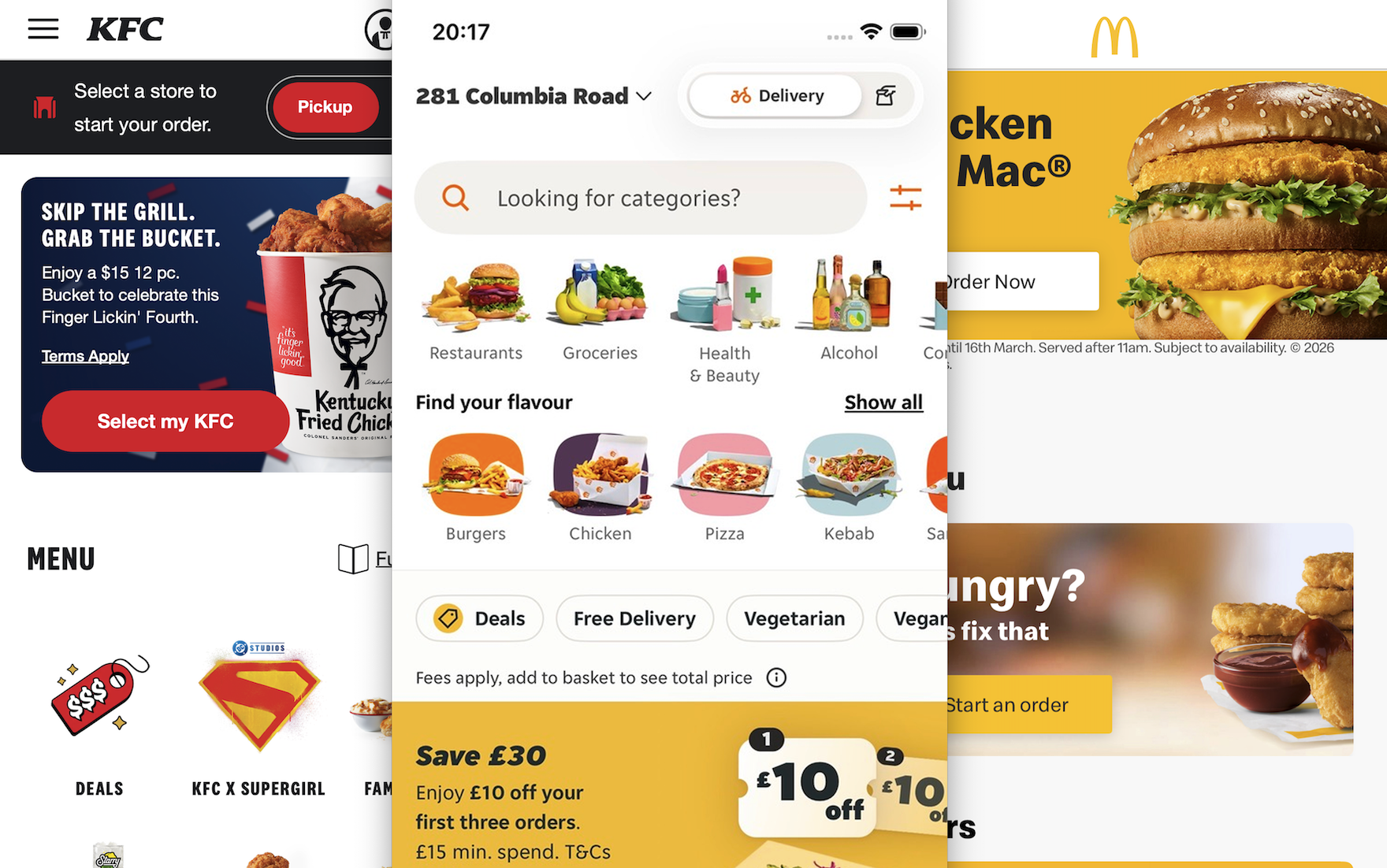
(Note: Unfortunately, e-mail and RSS don’t support advanced layouts and features. If the graphics in this article look strange, you may want to read the article in your web browser.) At Baymard, we’ve just released a new UX benchmark with 8 “Food Delivery & Takeout” UX case studies. This follows our large-scale user testing on Food Delivery & Takeout UX and adds to our existing ecommerce UX benchmark . In this article, we give you a snapshot of the overall UX performance. 8 Food Delivery & Takeout UX Case Studies and the Overall Performance Just Eat mediocre Food Delivery & Takeout 49 page designs: mobile, app KFC mediocre Food Delivery & Takeout 48 page designs: mobile, app Uber Eats mediocre Food Delivery & Takeout 54 page designs: mobile, app Domino’s Pizza poor Food Delivery & Takeout 34 page designs: mobile, app DoorDash poor Food Delivery & Takeout 48 page designs: mobile, app McDonald’s poor Food Delivery & Takeout 39 page designs: mobile, app Deliveroo poor Food Delivery & Takeout 53 page designs: mobile, app Burger King broken Food Delivery & Takeout 41 page designs: mobile, app YourSite.com? Want to know how your site performs? Get Premium access to review your own site or have it audited by Baymard researchers. These are the 8 in-depth Food Delivery & Takeout UX case studies. The 8 mobile sites and apps have been manually assessed across 390+ research-based UX parameters relevant to Food Delivery & Takeout , resulting in 3,100+ weighted UX performance scores and 1,900+ best practice examples from these mobile sites and apps. Each of the 3,100+ UX performance scores from the 8 case studies is summarized in the interactive scatterplot below — showing you how they perform collectively and individually: {{ scatterplot-graph: size=big + habitat=public + base-sites=collection:online-food-delivery + view-structure-id=gemini-st_l9jw5tjp }} The overall UX performance of the Food Delivery & Takeout sites and a
Mews Financial Services B.V., the regulated entity established by Mews Systems, has been granted an Electronic Money Institution (EMI) license by De Nederlandsche Bank (DNB). The license is a foundational step in Mews’ ambition to make its operating system the home for financial services purpose-built for hospitality, where running the business and managing its money begin to come together in a single platform.
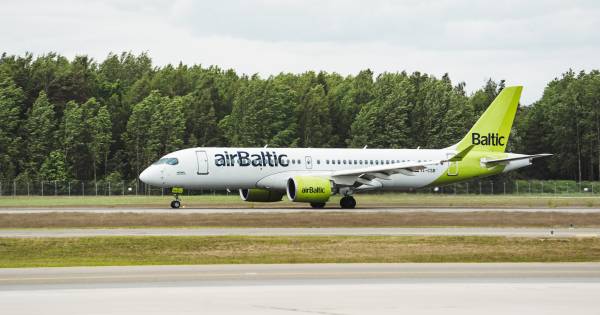
The Latvian national airline airBaltic today outlines the key elements of its business plan following its approval by the company’s Supervisory Board. The plan is designed to strengthen airBaltic’s long-term competitiveness, establish a sustainable capital structure, support its future development and maintain reliable connectivity for Latvia and the wider region.
Nothing ruins a great night of sleep faster than getting too hot. We slept on a myriad of cooling mattresses to find which ones drew the heat away best.