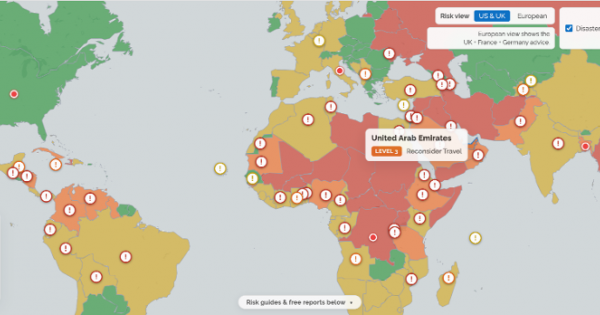
Sicuro Group today announced its free public access to the Sicuro Live Travel Risk Map, an interactive world map showing current travel risk levels for more than 240 countries and territories, refreshed automatically every 30 minutes. The map is available now at freetravelriskmap.sicurogroup.com with no registration and no paywall.
70/ 100Meets threshold
Why this score
Matches an include keyword (+50)
Description is available (+5)
Custom rule: AI travel relevance (+15)
Topics you define
Each topic is a place to collect research from sources you choose. Sources and rules can be added when you are ready.
Get up to 55% off and free meal boxes using a HelloFresh coupon code in August 2026. Discover our best codes and discounts to let you save time and money.
Master a new language with expert-led courses. Use our verified Babbel coupon codes to save up to 65% on student plans and 60% on 6-month subscriptions.
Explore current Columbia deals on jackets, outdoor gear, and apparel. Find active Columbia promo codes, student discounts, and free shipping offers to save on your next adventure.
From 40% off accessory bundles to verified student and military discounts, here's how to save on Predator, Nitro, and Swift laptops and monitors at Acer.com.
APOD Science APOD APOD: 2026 August 14 – Total… Today’s APOD Archive Submissions Index Search Calendar RSS Education About Discuss APOD Astronomy Picture of the Day Discover the cosmos! Each day a different image or photograph of our fascinating universe is featured, along with a brief explanation written by a professional astronomer. Total Solar […]
Existing labeled Bitcoin datasets are largely derived from community-reported abuse, blockchain heuristics, incident-specific collections, or proprietary labeling processes. Their construction methods are rarely publicly reproducible and often provide limited evidence that an address was directly involved in illicit activity. We present a reproducible pipeline for constructing evidence-backed Bitcoin labels from HackForums, an underground cybercrime forum with fifteen years of archived activity. The pipeline combines LLM-assisted screening, expert review, and on-chain validation to identify Bitcoin addresses explicitly associated with illicit transactions discussed on the forum. Each released label is supported by contextual evidence from underground discussions and validated on-chain. The resulting dataset contains 2,438 manually verified illicit Bitcoin addresses spanning 2010-2024 and twelve cybercrime categories assigned during LLM screening. We release the dataset, temporal metadata, and the complete extraction pipeline to support reproducible research on cryptocurrency-facilitated cybercrime.
How structured emergence solves manager burnout, team bottlenecks, and systemic design debt Observing the flock based on how individual biological behaviors aggregate into structured group intelligence (image source: Asa Leonard ) Molly Graham wrote an essay a week ago that ruined the traditional management approach for me. In it, she asked what would happen if we stopped long-term systematic planning like a set of stairs and started treating them like starling murmurations. It hit a nerve because design leadership is currently suffering from a bad case of mechanical thinking. We talk endlessly about cross-functional alignment, product development and operations, and predicting roadmaps. But mechanical systems are brittle. They crack the second an executive stakeholder pivots strategy, a competitor drops a new AI feature out of nowhere, or a team loses a seasoned designer in a month. Thousands of individuals operating as a single organic system without a central commander (image source: van IJken ) Starlings don’t crack under sudden stress. Tens of thousands of them fly in tight formation without a single leader, a flight plan, or a manager giving orders from the front. They rely on emergence: a complex group behaviour created by simple, local choices. If we pair that fluid intelligence with the raw endurance of migrating Canada Geese, we get a far better model for running design teams: Structured Emergence . 1. Pure Emergence (And Why Starlings Aren’t Enough) Local interaction rules in action when individual agents compute directional changes based on nearest-neighbor states rather than central control (image source: zamani ) In a landmark 2010 study published in PNAS , complex systems researchers at Rome’s Institute of Complex Systems proved that a starling does not track the whole flock. Instead, each bird continuously adjusts its speed and direction based solely on its six or seven nearest neighbours, regardless of flock density. They stuck to three subconscious
Two generations learned what a thinking machine looks like from a production line of individuals and the picture is not holding. AI assisted. The saga imagined thinking machines as immortal individuals in metal bodies. Real AI showed up as copyable software, and every difference is worth understanding. We grew up with the droids. R2-D2 beeping through a firefight, C-3PO fretting about the odds of survival, a whole galaxy quietly run by machines that think. Many of the androids from Star Wars are the most likable robots in film, and they are also the wrong picture of artificial intelligence. That matters more than it should, because for two generations the droids were most people’s first and clearest mental model of a thinking machine and mental models, once they take hold, change is hard. Science fiction rarely predicts the future, it records what a culture finds mysterious and goes from there. This is not a complaint about the movies, which are wonderful. It is a way to see current AI more clearly by naming what the fiction quietly assumed: that a mind is one soul in one body, that intelligence needs a body, that loyalty ships by default, and that you can wipe a machine clean. All of our thoughts around that need to change, and below is why. A droid is written as one irreplaceable self; a model is a file you can copy, fork, and roll back. The Copyable Mind R2-D2 and C-3PO are written as singular individuals, each with decades of continuous memory and very different personalities. They are also mass-manufactured, off-the-shelf models, and the story never notices the seam between those two facts. In our world that seam is the whole plot: A digital mind is a file, and you copy it, you fork it, you run a thousand instances at once, and you roll one back to the version it was yesterday. This is not a thought experiment. One open model, Meta’s Llama, has spawned more than 85,000 derivatives on Hugging Face , tens of thousands of forked and fine-tuned copies of a single r
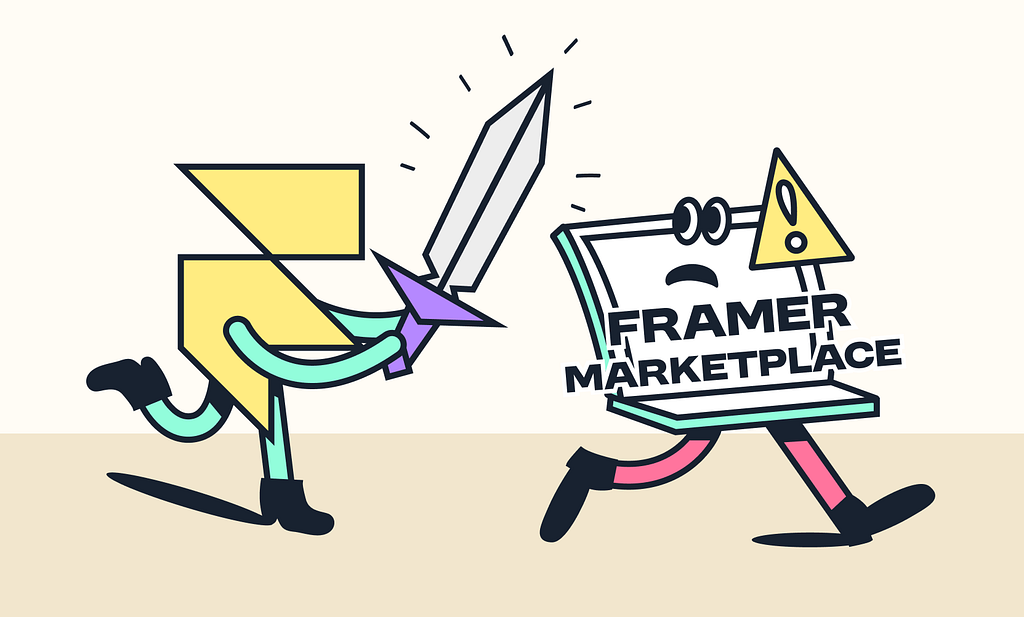
10 controversies and a brief history of the Framer marketplace Full disclosure, I do not work at Framer, nor do I have any affiliation with them. I’m just a regular creator who has been in the space for a while and watched the evolution unfold in real time. I sold my first Framer template in April 2023. That was over 3 years ago. I’ve been in the Framer space since late 2022. To say I’ve seen the Framer marketplace change and evolve in that timeframe is an understatement. To anyone who is just starting, this article is meant to encourage you that what the marketplace and community are experiencing is not new. Far from it. Take a trip with me back in time, and let’s look at how things were back then compared to now. Back in 2023, when I was getting started with Framer, there was seemingly endless opportunity with templates. Today we’d say that this was the gold rush. In those days, Framer was emerging quickly, and few creators were making resources specifically for Framer. Webflow was still all the rage, and Claude, Figma Sites, Codex, and other options were unforeseen. AI was primitive, with ChatGPT just sprouting. Framer was the new kid on the block and was quickly growing in popularity, mostly due to designers posting design porn, revenue screenshots, and resources on Twitter. The space was vibrant as ever at this time. I loved the blend of creativity and entrepreneurship. Cédric was launching templates like Dashfolio, Nandi was making tutorials and resources, Nabeel was making a remix library called SegmentUI , Aleks was building templates on livestream and creating Overrrides , Rahul Chakraborty was making groovy stickers and arrow dynamics , Joris and Ryan were building Framer form solutions, Isaac was making Framestack and RemixRoad, Matteo was making a design system library called Framepad , Matt Jumper, Dan Hollick, and Ryan Hayward were making their own Framer courses…The space was exciting, to say the least. With all of this happening, it was hard to tell
AI is shifting the culture, from tech CEO manifestos to 1 am job interviews. We unpack some of the latest, along with the top findings from Black Hat and Defcon, this week on Uncanny Valley.
BusinessBusiness / Artificial IntelligenceBusiness / Big Tech
NASA’s 737 aircraft was painted this week in Oklahoma as it progresses with modifications for use as a reduced gravity test aircraft for the agency. NASA’s Armstrong Flight Research Center in Edwards, California, took ownership of the aircraft from the United States Air Force in June. The aircraft will perform lunar-gravity parabolic flights to validate […]
AeronauticsArmstrong Flight Research CenterArtemis+2 more
Growing up in Grafton, West Virginia, engrossed in Star Wars and all things science fiction, Fletcher Newell had an early interest in space exploration. That interest only grew when, in 2013, his fourth-grade class took a field trip to a nearby NASA facility he had not yet heard of – NASA’s Katherine Johnson Independent Verification […]
Goddard Space Flight CenterInternshipsKatherine Johnson IV and V Facility+2 more
People with disabilities (PWD) increasingly use avatars to express disability identities in social virtual reality (VR), but greater visibility also invites targeted harassment. Existing safety features are often insufficient, overlooking PWD's experiences and needs. To address this gap, we co-designed protection mechanisms with 11 PWD to reveal their values and needs. Our research employed a social lens to interpret harassment behaviors and protection mechanisms. Inspired by Hall's Proxemics Theory that interpersonal distances indicate social intent and boundaries, we divided social VR spaces into four proxemic zones (Intimate, Personal, Social, and Public) and used them to structure our protection mechanism co-design. We also provided different protection mechanism probes (Inform, Educate, Consent, and Combat) to elicit participant preferences. Our study highlighted the role of social proximity in shaping PWD's harassment perception and protection preferences and revealing PWD's unique social values and needs (e.g., managing harassment with optimism and resilience, prioritizing social image over safety). We proposed design recommendations for protection mechanisms that protect PWD while maintaining their desired social images.
In June and July, the United States ushered in visitors from dozens of countries as a World Cup host. It wasn’t enough to put an end to disappointing overseas tourism figures.
Knowing someone deeply means not just understanding what they say or do but also how they will likely think, react, and engage across situations. Such predictions could eventually inform systems to anticipate when the individual is about to deviate from their goal, catch regrettable behaviors before they are made, and surface blind spots before they take hold. While many interactive systems model users to enable more personalized interactions, most cannot make such behavioral predictions, as this often requires longitudinal observation and inference of how the individual's behaviors unfold across various everyday situations. In this work, we introduce a novel LLM-based predictive behavioral modeling approach that anticipates a user's likely behavior across everyday conversational situations. We (1) collect a longitudinal dataset of over 1000 hours of naturalistic conversations from 14 participants using a wearable smartwatch; (2) evaluate LLM-based predictions against ground truth behaviors; and (3) use semi-structured interviews to explore participants perceptions of behavioral predictions and their views on possible forms of future behavioral support. Altogether, our findings provide evidence that person-specific verbal behavior can be predicted from longitudinal conversational data. This opens up new possibilities for potential future context-aware, anticipatory, proactive and personalized AI systems.